
Extraction and drying, Rowlett TX
After a Leak, Burst Pipe or Backup: Water Damage Restoration in Rowlett, TX
Two jobs happen after a leak, and they are genuinely separate. Stopping the water is plumbing. Getting the building dry is this.
The order matters: drying a structure that is still taking on water is wasted money. Fix the cause first, then dry it properly.
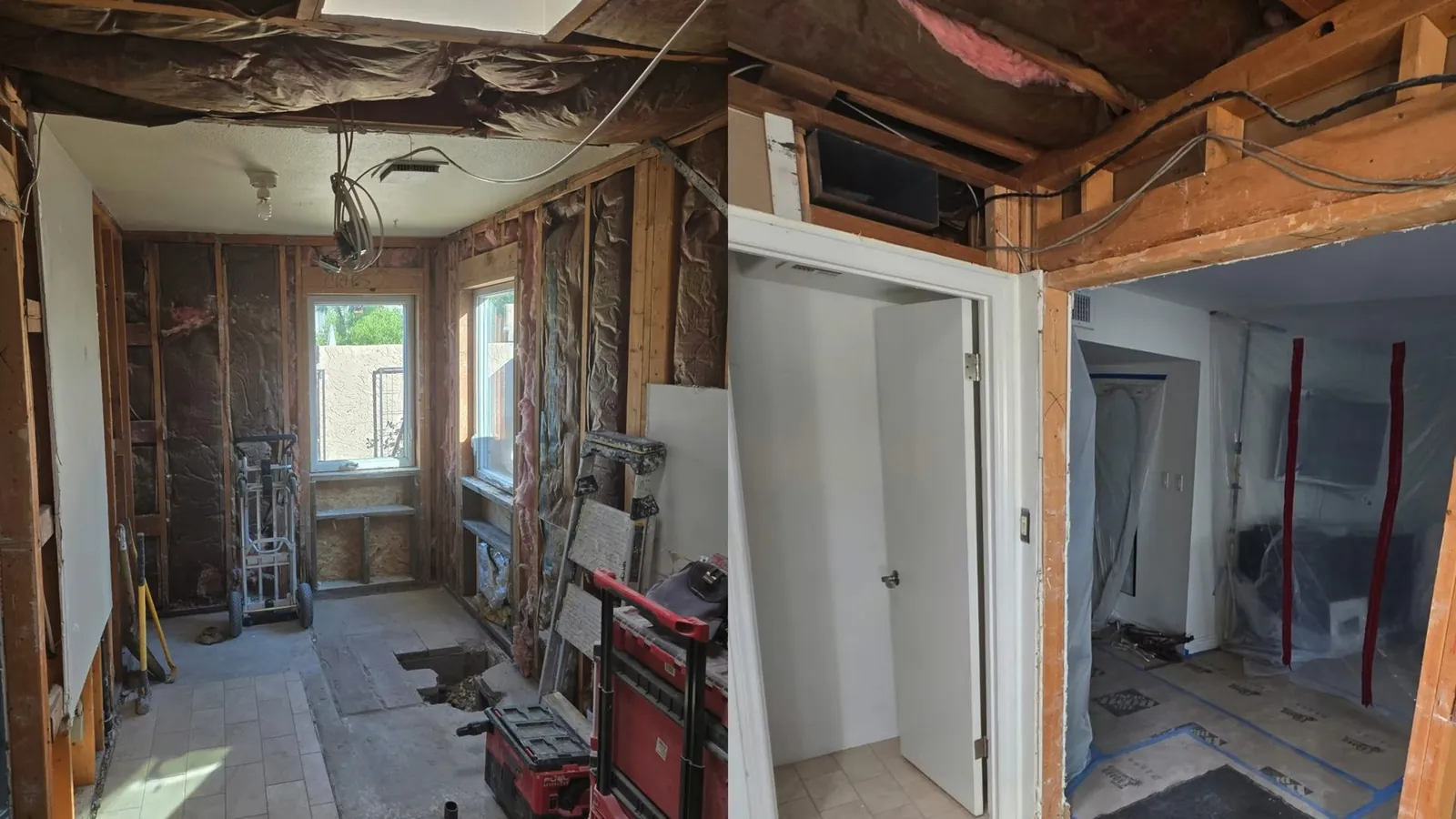
Drying and water removal we handle, and the rebuild we do not
We handle water removal, humidity control and drying out the structure itself. Getting standing water out, getting the moisture out of the materials, and documenting that it reached dry.
We do not do reconstruction. Replacing drywall, flooring, cabinetry or decorating after the drying is finished is a contractor's work, not ours.
On mould we do removal where it is present, and we do not offer mould testing. If you want air sampling or a written species identification, that is an independent hygienist, and there is a good argument for keeping testing separate from the company doing the removal anyway.
Saying that plainly up front is more useful than finding out halfway through.
Stop, make safe, document: the first 24 hours after water damage
What happens, and roughly when.
- Stop the water. Nothing below this matters until that is done.
- Make it safe. Power off to affected circuits, and no walking on a ceiling that is holding water.
- Document before moving anything. Photographs of every affected room, and of standing water depth.
- Extract. Standing water out first, which is the single biggest reduction in what has to be dried.
- Lift what traps water. Rugs, and usually carpet underlay, which rarely survives.
- Set the drying. Air movers to move moisture out of materials, dehumidifiers to take it out of the air.
- Monitor and record. Moisture readings at the same points daily, until the readings say dry rather than the surface looking dry.
Standing water right now? Call as an emergency, and photograph it before you mop.
Which building materials dry in place and which get removed
Useful to know before anyone starts pulling things out.
| Material | Usually dries in place | Notes |
|---|---|---|
| Solid timber framing | Yes | Slow, and the readings decide, not the calendar |
| Drywall, clean water, partial height | Often | Depends on how long it stood |
| Drywall, sewage or long exposure | No | Removal to a line above the damage |
| Carpet | Sometimes | Clean water only, and usually without the underlay |
| Carpet underlay | Rarely | Normally replaced |
| Engineered or laminate flooring | Rarely | The core swells and does not recover |
| Solid hardwood | Sometimes | Can cup and then flatten over weeks; worth trying |
| Insulation in a wall cavity | No | Holds water against the framing |
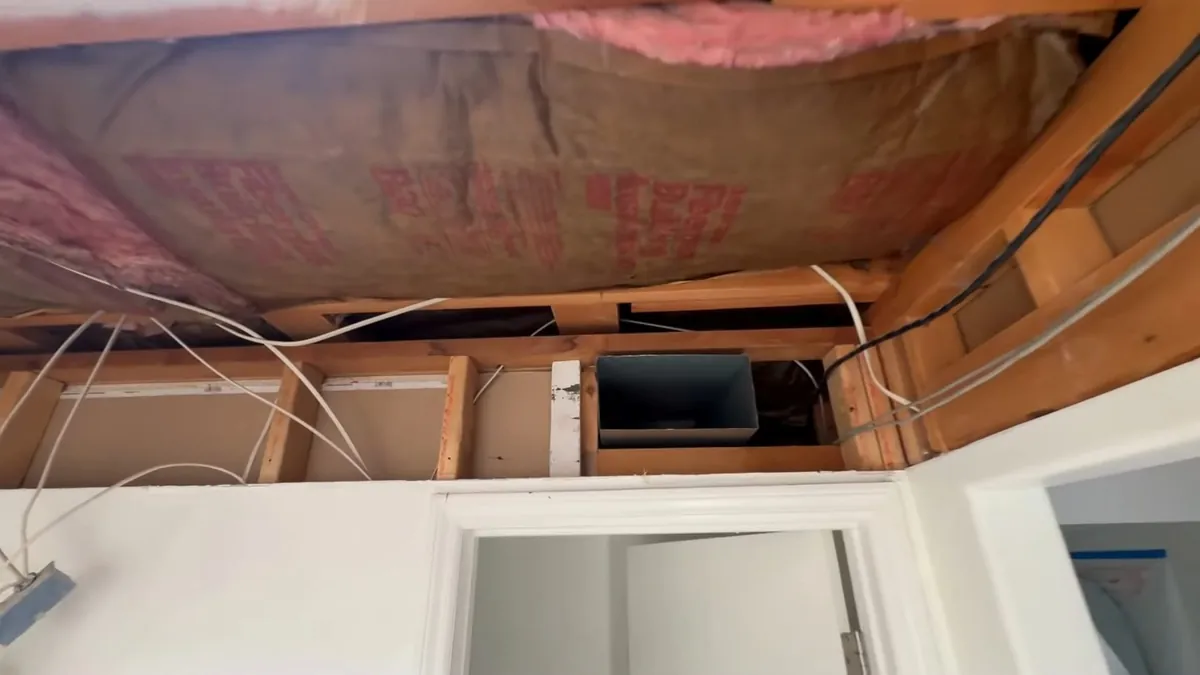
By where the water went
Different paths, different work.
Ceilings and wall cavities
Water travels along framing and drops at the first low point, so the stain is rarely under the source. Cavities hold moisture long after a surface reads dry, which is what the meter is for.
A bulging ceiling holding water gets relieved deliberately and from the side, not poked from underneath.
Hardwood and wood flooring
Solid hardwood cups when it takes on water from below and can flatten again as it dries, so it is worth attempting before replacing. It is also slow, and rushing it with heat causes more damage than the water did.
Engineered and laminate boards swell at the core and do not recover. We will say which you have.
Carpet and soft furnishings
Clean-water carpet is often salvageable, underlay usually is not. Category matters more than appearance: anything contaminated is a removal rather than a drying decision.
Sewage backup cleanup
Different category entirely. Contaminated water means removal of porous materials rather than drying them, proper containment while the work happens, and disinfection of what stays.
This is the one where trying to save money by drying instead of removing reliably costs more later.
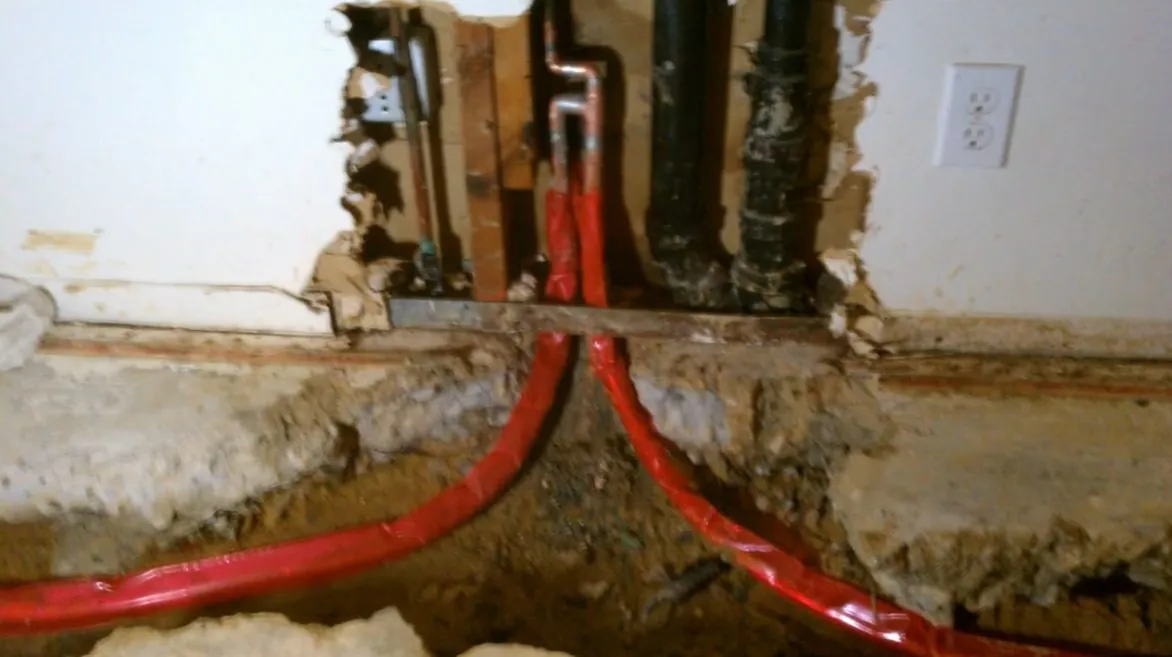
Mould removal after water damage: what it involves
Where water has sat long enough for growth, removal is part of getting the building back to dry and sound. Containment first so spores are not spread through the rest of the property, then removal of affected porous material, then cleaning what remains.
For questions about health and mould exposure, ask your doctor. If you want sampling, an independent hygienist is the better route, since removal and testing are best kept separate.
Storms, flooding and the North Texas pattern
Two local patterns drive this work here. The first is freezing: the statewide freeze in February 2021 produced burst pipes across North Texas on a scale that outran the trade's capacity for weeks.
The second is rain arriving faster than clay soil can take it. Blackland Prairie clay sheds heavy rain rather than absorbing it, so surface water reaches a property quickly and finds whatever drainage is already silted up.
Ice dams, which feature in this service line nationally, are a northern-climate problem and not a Rowlett one. We have left that out rather than pad the page with it.
Commercial water damage
On a commercial site the drying plan is built around the trading hours and the stock, not just the structure. Equipment running in a public area has different constraints from equipment running in an empty house.
Documentation matters more too, because a commercial claim is usually scrutinised more closely. Daily moisture logs at fixed points are part of the deliverable rather than an extra.
Questions after water damage
What does drying a property cost?
The meter is equipment days. A single room caught early might dry in two days on three air movers. A kitchen and the two rooms either side of it, found a week later, can run five days with a desiccant unit, and the readings decide that, not an estimate made on day one.
Which is why you get a scope and a daily rate up front rather than one total, and why the cost breakdown page carries no band for drying.
Will my insurance cover this?
That is between you and your insurer and depends on the cause rather than the damage. Policies commonly treat a sudden failure differently from a long-running leak.
What helps either way is documentation: photographs before anything moved, the cause identified in writing, and daily moisture readings showing the drying was done properly rather than guessed.
How long does drying take?
Typically three to five days for a contained incident, longer where water reached cavities or subfloor.
The readings decide, not the calendar. Equipment coming out on day three because the schedule said so is how material gets closed up wet.
Who has to be licensed on a job like this?
For the drying itself, no. For the plumbing repair that stops the water, yes, and that is licensed work through the Texas State Board of Plumbing Examiners.
On the restoration side the question worth asking is what drying standard they work to and whether the moisture logs come to you at the end. Those logs are what an insurer looks at.
It looks dry already. Do I still need equipment?
Surfaces dry long before the material behind them does. Drywall can read dry to the touch with a saturated cavity behind it, and that is where growth starts.
A meter answers this in a minute. If it reads dry, we will tell you so and you will not need us.
We dry and remove. Reconstruction is a contractor, and we will say so.
Surface feels dry? A meter settles it in a minute. Ask us to check.
Related work on this site
The plumbing repair that ends the water comes first. A line that split is burst line repair, water under the concrete is slab leak repair, and a leak nobody can find yet is water leak detection. Sewage coming back up a drain is main sewer line repair on the plumbing side, with the cleanup covered here.
Water in the building?
Ring once the water has stopped, or while it is being stopped. The first 24 hours decide how much comes out and how much dries in place.