
Rowlett's highest-demand plumbing job
Water Under the Slab? Slab Leak Repair in Rowlett, TX Starts With Finding It
A slab leak is a supply line failing where it runs through or beneath the concrete your house sits on. In Rowlett it is the single busiest thing we do, and the ground is the reason.
Nothing gets opened up until the leak is located. Detection is its own step with its own price, and you will know both numbers before either part starts.
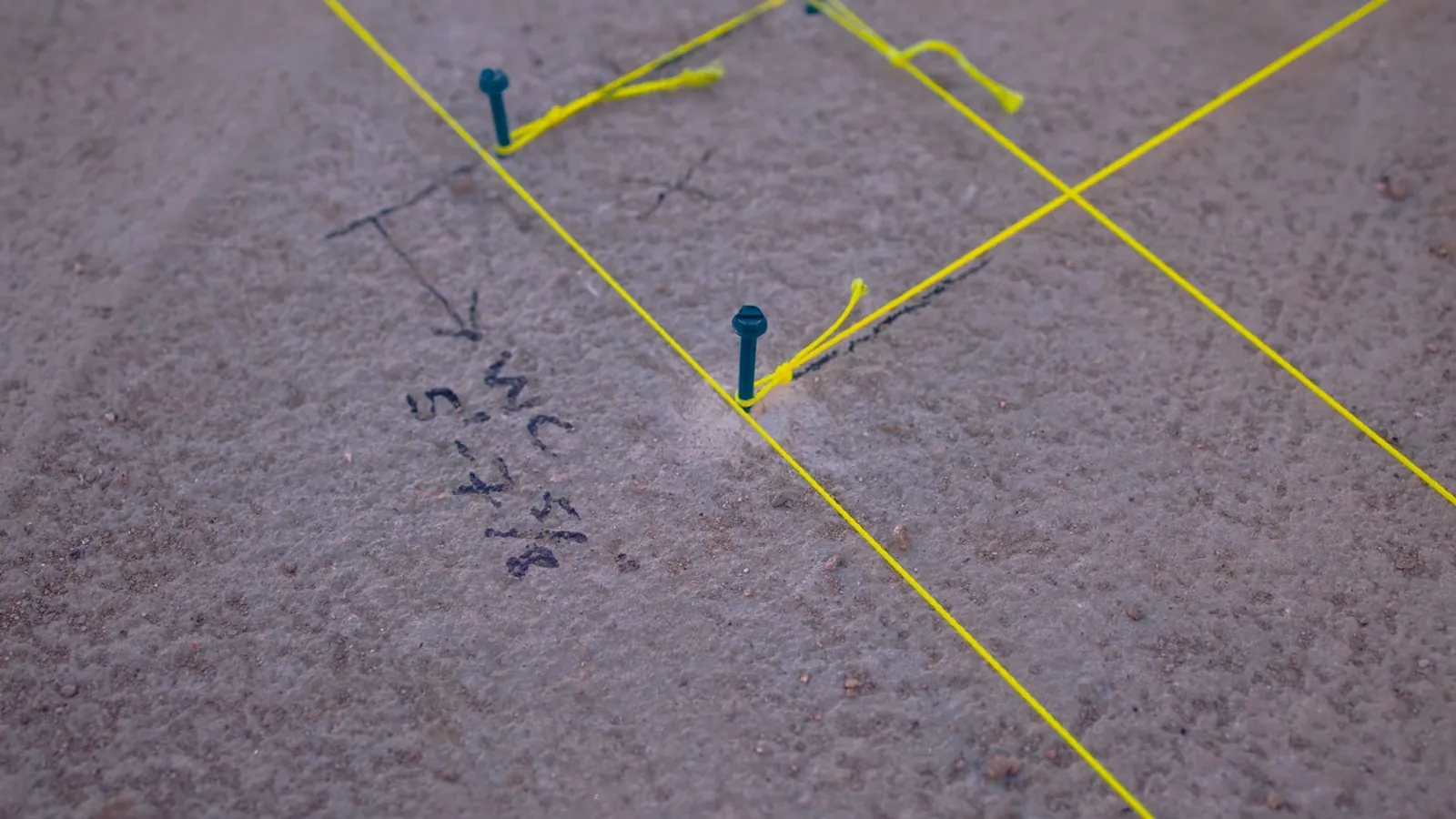
The signs that bring most Rowlett slab leak calls
Any one of these on its own is worth a phone call. Two together usually means it is under the slab.
- A warm or hot patch on a tile or vinyl floor, often noticed barefoot before anything else.
- A water bill that has climbed over two or three cycles with no change in how the house is used.
- The sound of running water at night with every tap and appliance off.
- The meter dial still turning after the valve into the house is closed.
- A damp line along the bottom of a garage wall or across the slab edge.
- Hairline cracking appearing in baseboards, door frames or tile grout lines.
- Hot water that runs out faster than it used to, when the failed line is on the hot side.
Why Blackland Prairie clay puts Rowlett slabs under load
Rowlett sits in the Blackland Prairie, on Houston Black clay. That soil runs 46 to 60 percent clay by content, and it is a shrink-swell soil rather than an inert one.
Dried out, it splits open: cracks wider than 4 inches at the surface and deeper than a foot, staying open 90 to 150 days in a normal year. When the rain returns, the same soil swells back. Foundations across this region are built with steel reinforcement precisely because of that cycle.
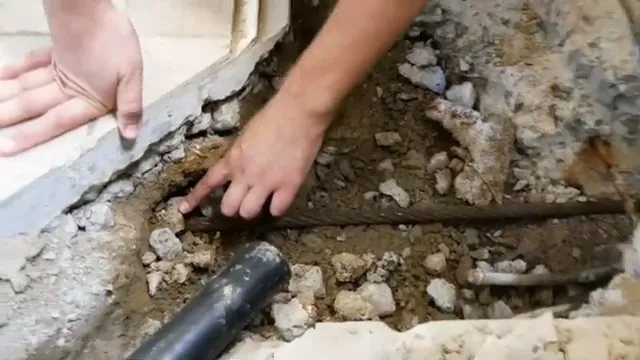
A slab that moves with the ground carries whatever is cast into or running beneath it. Copper that is bearing on concrete, or a joint that is taking load it was never meant to take, is where the failure starts. The soil record documents the movement; the step from movement to a sheared line is the accepted mechanism rather than a survey of any particular house.
Post-tension slabs, and what they change about the repair
A good share of Rowlett's housing went up from the 1980s onward, which is the period when post-tension slab construction became common across North Texas. Those slabs have steel cables running through them under high tension.
That changes the job rather than ruling it out. The cables have to be located and avoided before any concrete is cut, because striking one is dangerous and expensive. We scan before cutting on any slab of that construction type, and on a post-tension slab an overhead reroute is often the more sensible route for that reason alone.
Two risk factors you may read about elsewhere do not apply here. Caliche soil is a Southwestern condition rather than a Blackland Prairie one, and midcentury slab construction is largely outside Rowlett's build era. We have left both out rather than transplant them from another market.
What your build year suggests about the pipe under the slab
The city more than quintupled in population across the 1980s and 1990s, so most of its housing falls in a narrow band. Build year is a strong hint at what is down there.
| Era | Likely supply line | What tends to fail |
|---|---|---|
| Pre-1980 core near Main Street | Galvanised steel, early copper | Internal corrosion closing the bore, pinholes |
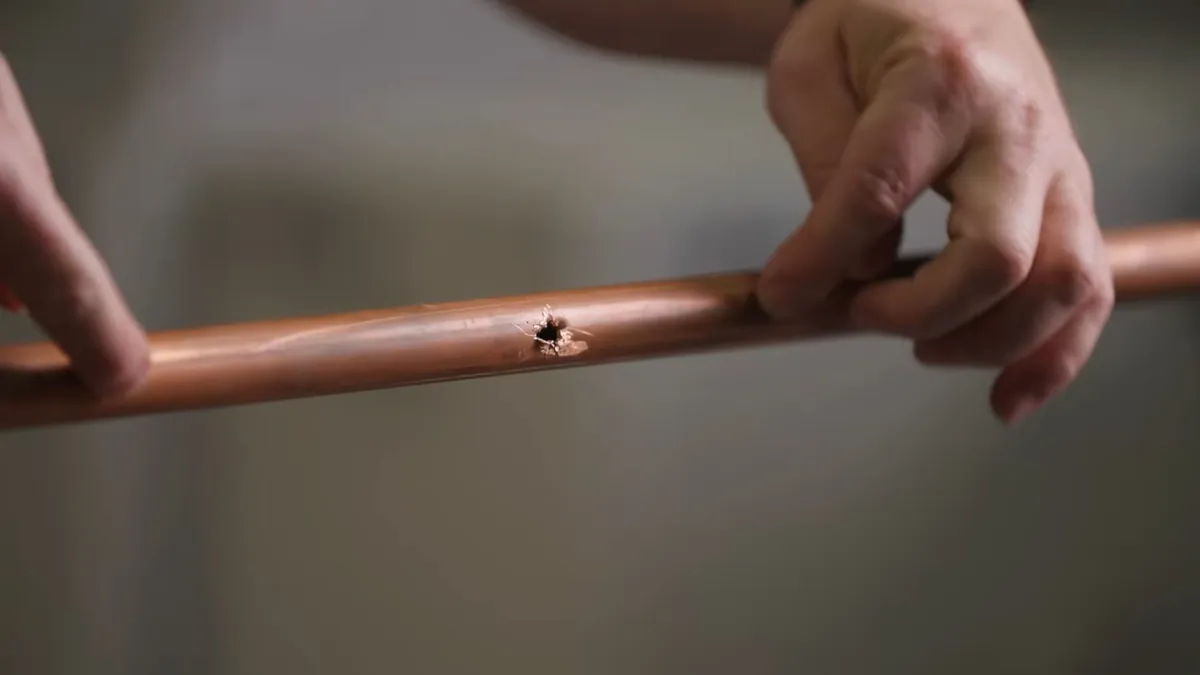
| 1980s to mid 1990s | Copper, some polybutylene | Pinholes at bearing points, fitting failure |
| Late 1990s to mid 2000s | Copper moving to PEX | Joint and fitting failures more than pipe wall |
| Mid 2000s onward | PEX | Fitting and manifold issues rather than slab runs |
Nobody can tell you which of these you have without looking. It does tell us where to look first, and it is the difference between a targeted search and an exploratory one.
How the leak is located before anything is opened
- Confirm it at the meter. Everything off, watch the dial. If it moves, water is going somewhere.
- Isolate which side. Closing the valve into the house separates a service line problem from one inside.
- Split hot from cold. Closing the cold inlet at the water heater tells us which of the two systems is losing water.
- Listen. Acoustic equipment picks up the sound of water escaping under concrete, which narrows it to an area.
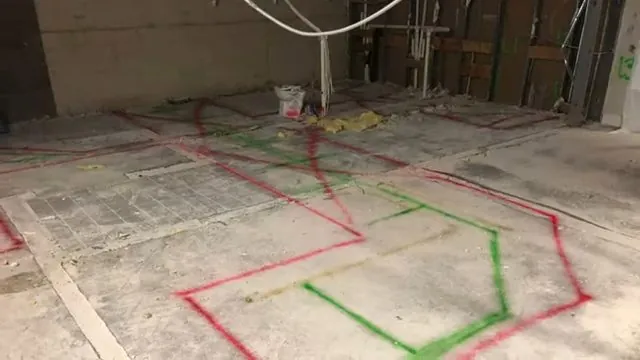
- Trace and pinpoint. Electronic line tracing and thermal reading bring that area down to a spot small enough to work on.
- Mark it, then agree the repair before any concrete is cut.
Spot repair, overhead reroute or repipe
Three real options, and the right one depends on how many times the system has already failed.
Spot repair
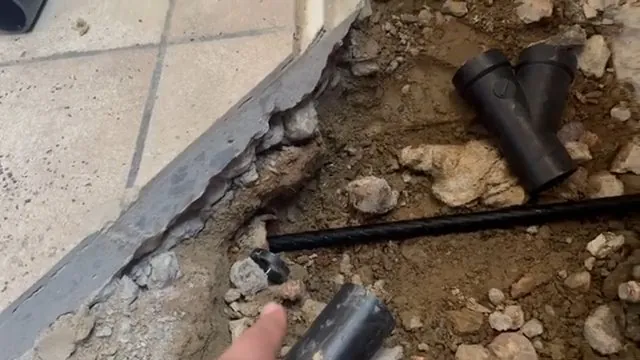
Open the slab at the marked point, cut out the failed section, replace it, and close up. The right answer for a first failure on an otherwise sound system. It is the least disruptive and the least expensive of the three.
Overhead reroute
Abandon the under-slab run and route a new line through the attic and down the walls instead. Nothing is cast in concrete afterwards, so that run cannot fail the same way again. Worth considering when the failed line is long or awkwardly placed.
Whole-home repipe
Replace the supply system rather than chase it. After two or more leaks in a couple of years, this usually costs less over time than the next round of spot repairs. Ranges for repiping are listed on the cost page.
Bring your last three water bills to the call. The climb is diagnostic.
What happens if a slab leak is left
A slab leak does not stay still. Water under a slab saturates the clay beneath one part of the house while the rest keeps going through its normal seasonal cycle, which means the foundation is being loaded unevenly.
That is the real argument for dealing with it rather than the water bill. The bill is the symptom people notice; the differential movement is the part that gets expensive.
There is also the quiet damage: saturated flooring, skirting, and the conditions for mould in a wall cavity that nobody has opened in twenty years.
The same applies to commercial slab leak work, where the floor above the failed line is usually carrying stock, racking or equipment that has to move before anyone can reach it. That access problem, not the pipe, is what makes a commercial job longer than a residential one.
Water spreading across the floor? Treat it as an emergency and tell us where it started.
What to document if you are making an insurance claim
Policies differ, and we are not going to tell you what yours covers. These are the things that are difficult to gather after the repair.
- Photographs of the affected floor and any staining, before anything is lifted.
- Your last three or four water bills, showing the climb.
- The meter reading taken with the house shut off.
- The written detection result showing where the leak was found.
- The written repair scope and price, before the work.
- Dated photographs of the opened slab and the failed section of pipe itself.
Ask for all of it. A repair done without a paper trail is harder to claim against than one with it.
Slab leak questions from Rowlett homeowners
What does slab leak repair cost in Rowlett?
The published band for detection plus a spot repair is $1,500 to $4,500. Where a particular job lands inside it comes down to pinpointing time, foundation depth at that spot, and whether the fix is concrete or an overhead reroute.
Repiping is a different range again, listed on the plumbing cost guide. The price for your job is put in writing before any work begins.
Do I have to break the floor?
Not always. An overhead reroute abandons the under-slab run and takes a new line through the attic instead, which avoids cutting concrete entirely.
Whether that is sensible depends on the length of the run, the access above the ceiling, and whether the rest of the system is likely to follow.
Is this covered by my home insurance?
That is between you and your insurer, and we are not going to guess at your policy. Many policies treat the damage caused by escaping water differently from the cost of getting to the pipe.
What we can do is give you the documentation in a form that is straightforward to submit. The checklist above is what is worth having.
Does a licence matter for this kind of work?
Yes. Work on the supply system under a foundation is not handyman work, and the Texas State Board of Plumbing Examiners is the state body that licenses plumbers here.
Check the licence of whoever you hire, and check it carries insurance for the work being done. That verification is the homeowner's responsibility.
How long does the repair take?
Detection is usually a few hours. A spot repair is commonly a day once the location is agreed, plus drying and making good afterwards.
A reroute or a repipe runs to several days, and we will tell you which water will be off and when before the work starts.
Ask what detection costs separately from the repair. You should know both.
If it is not a slab leak: leak detection and lining pages
If the meter is turning but no floor is warm, the better first move is water leak detection, since the water may be running inside a wall or out on the service line. When an under-slab line is rerouted rather than opened up, the method is covered on the trenchless pipe lining page, and a line that has split suddenly rather than worn through is burst pipe repair.
Think you have a slab leak?
Describe what you are seeing and we will tell you whether it sounds like a slab leak, a water heater, or something simpler, and what locating it would involve.