
Tankless, Rowlett TX
Hot Water on Demand: Tankless Water Heater Services in Rowlett, TX, Sized for Hard Water
Tankless suits some houses very well and some houses badly, and the deciding factors are mostly about the building rather than the household.
This page starts with whether it is right for you, because a tankless unit fitted into the wrong situation disappoints for twenty years.
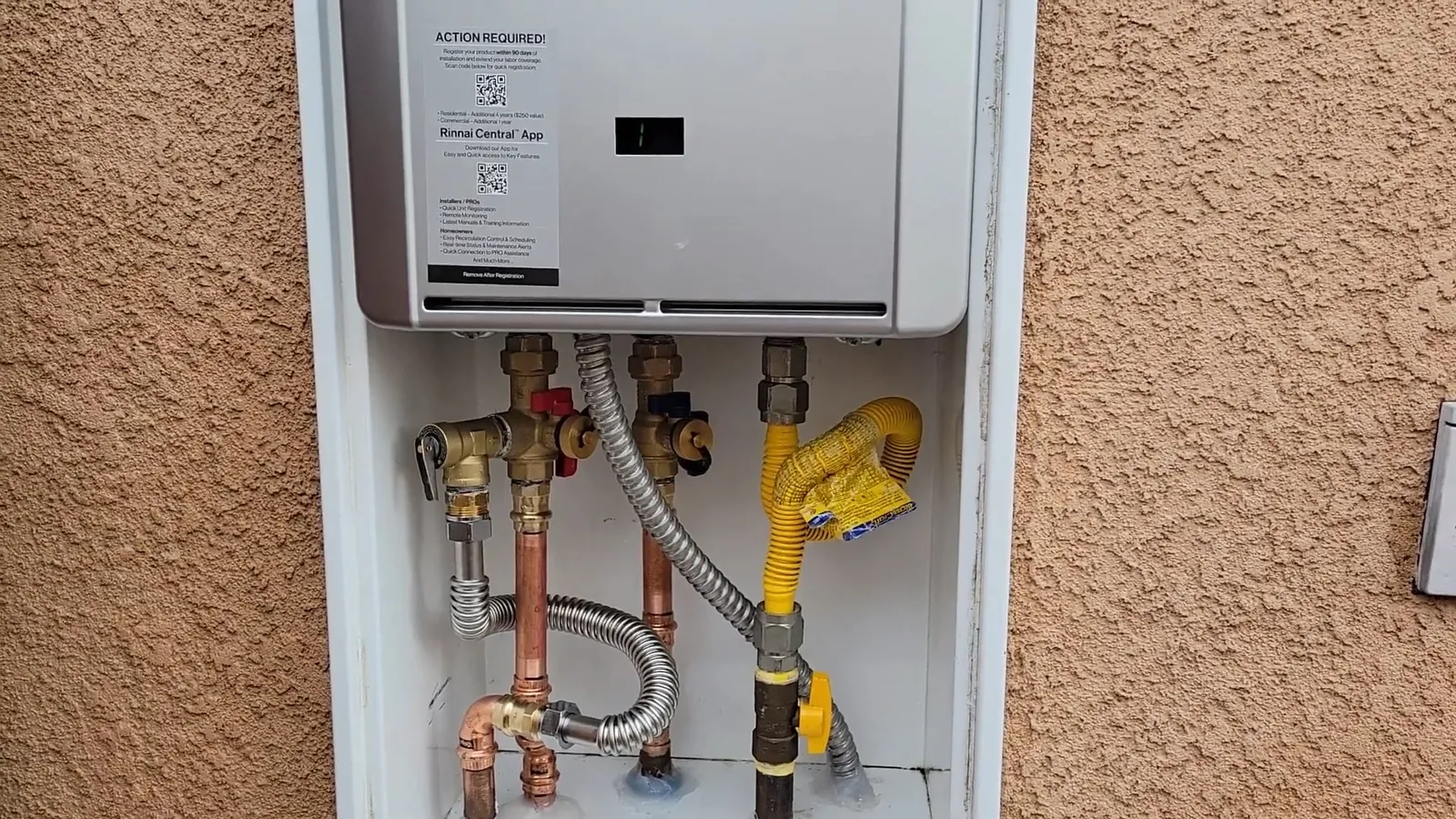
Checklist: is a tankless heater a good fit for your house?
Work down this honestly. If most of the second group applies, a tank unit is probably the better buy.
- GOOD FIT: you run out of hot water before everyone has showered.
- GOOD FIT: the current unit is in a space you want back, or there is no good tank location.
- GOOD FIT: you plan to stay in the house long enough for the longer service life to matter.
- GOOD FIT: gas is available and the existing line is adequately sized or easy to upgrade.
- POOR FIT: electric only with no panel capacity, which makes whole-home tankless expensive fast.
- POOR FIT: several fixtures routinely run at once and you want the cost of a single unit, not two.
- POOR FIT: you are selling within a couple of years and want the money back.
- POOR FIT: nobody in the house will descale it annually, on water this hard.
Sizing a tankless unit: gallons per minute and temperature rise
A tank is sized by how much it holds. A tankless unit is sized by how much it can heat at once, measured in gallons per minute at a given temperature rise.
Temperature rise is the part people miss. The incoming water is colder in January than in July, so a unit that delivers plenty in summer can disappoint in winter at the same flow.
We size for the worst case rather than the average: the coldest incoming temperature and the number of fixtures you actually run together.
Ask about the gas line before you compare quotes. It is what differs.
Whole-home and point-of-use tankless: two different products
Two different products that get discussed as one.
Whole-home units
One unit replacing the tank and serving the house. The usual arrangement, and the one that carries the gas sizing and venting questions.
Distance matters here. A fixture a long way from the unit waits longer for hot water than it did from a tank, because there is no stored hot water in between.
Undersink and point-of-use units
A small unit serving one fixture or one room, fitted close to where the water is used. Useful for a basin a long way from the main supply, a garage sink, or an outbuilding.
They are sometimes the better answer alongside a tank rather than instead of one, which is not how they are usually sold.
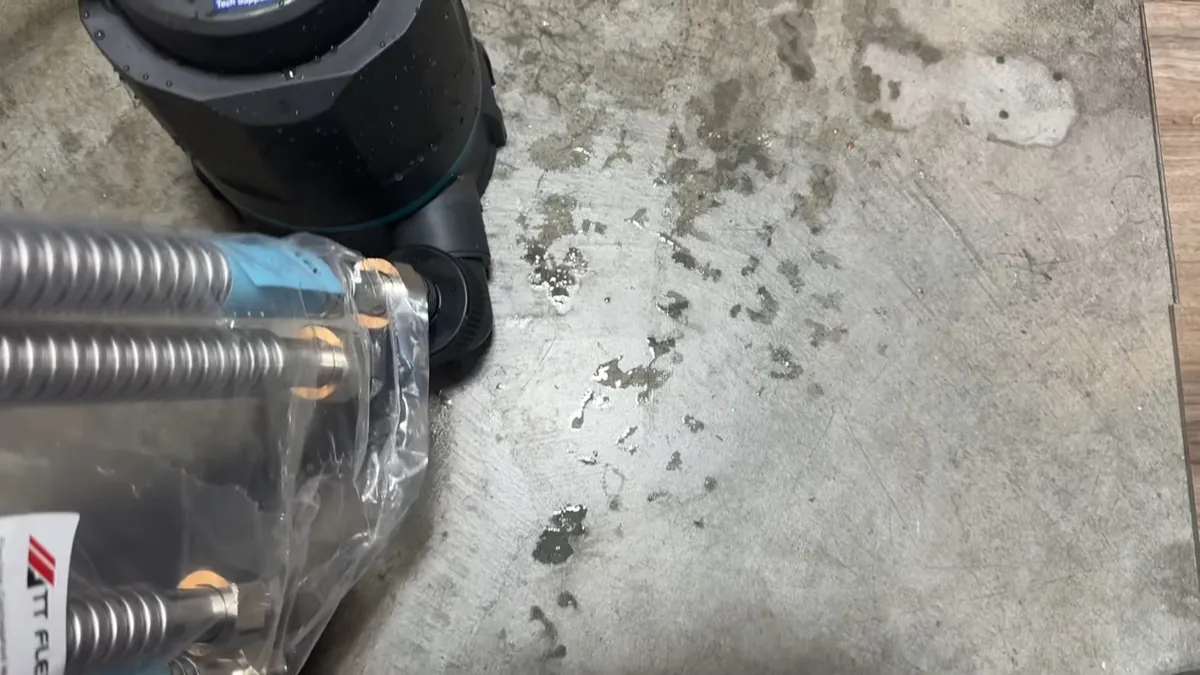
Descaling a tankless unit on Rowlett's 6 to 12 grain water
At 6 to 12 grains a gallon, the range recorded on the district supply in 2024, Rowlett sits at the hard end of what tankless manufacturers assume in their service intervals.
A tankless unit heats water very rapidly across a small heat exchanger, which is exactly the condition that drives scale out of solution. Scale narrows the exchanger, the unit works harder, and efficiency and life both drop.
Annual descaling is the maintenance that keeps the 18 to 25 year service life realistic rather than theoretical. On water this hard, skipping it for several years is how a tankless unit ends up performing worse than the tank it replaced.
What a descale involves
Worth knowing whether your installation allows it before you need it.
- Isolate the unit at the service valves. If the installation has none, they have to be added first, which is the single most common obstacle.
- Connect a circulation pump and a bucket of descaling solution to the service ports.
- Circulate for the period the manufacturer specifies, typically most of an hour.
- Flush through with clean water until it runs clear.
- Clean the inlet filter screen, which catches sediment and is routinely forgotten.
- Restore, fire the unit and check the flow and temperature against what it managed before.
If your unit was fitted without isolation valves, ask about adding them. It turns descaling from a job into a routine.
The two costs people are not told about
The gas line. A tankless unit demands far more gas at once than a tank does, and an existing line sized for a tank often will not carry it. Upsizing the run is real work and it belongs in the quote, not in a conversation on the day.
The venting. Tankless units need their own vent arrangement, usually a sealed vent through a wall, and reusing an old flue is generally not an option.
Where a quote looks notably lower than others, these two are usually what is missing from it.
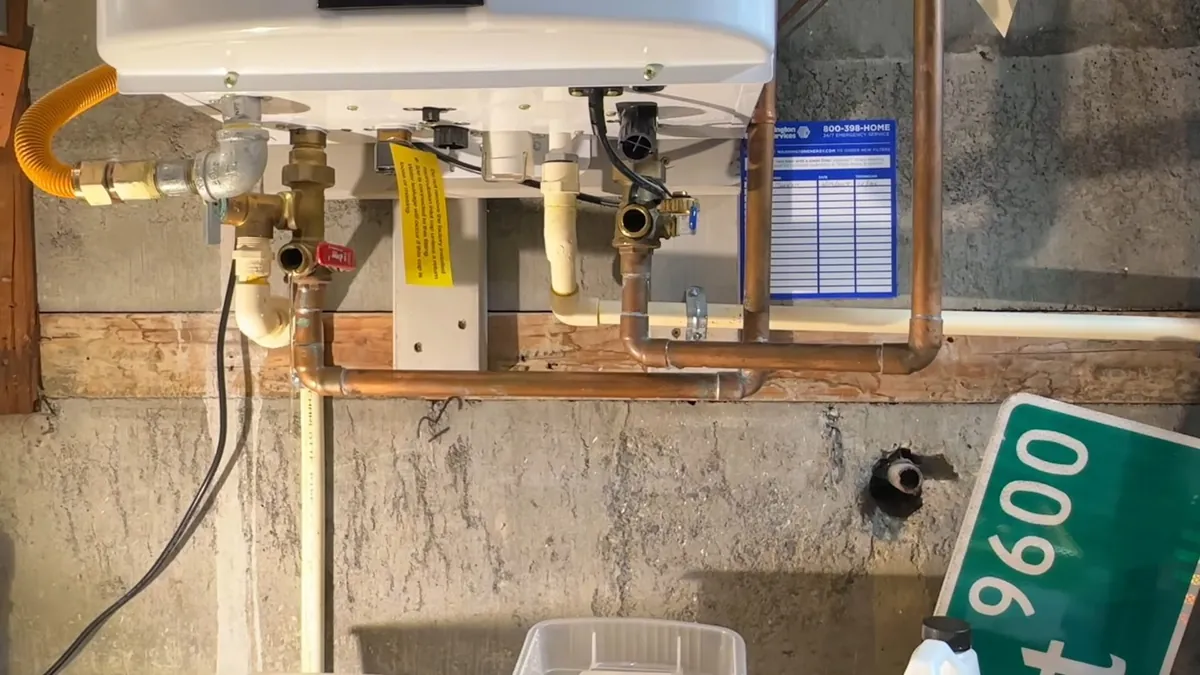
Tankless and tank water heater cost ranges in Rowlett
| Work | Range | What moves it |
|---|---|---|
| Tankless water heater installation | $2,500 to $4,800 | Whether the gas run has to be upsized, whether the panel can carry it, and where the vent can terminate |
| Tank replacement, for comparison | $1,200 to $2,800 | Tank size, venting, expansion tank requirement |
Descaling is quoted per visit. Both installation bands are on the Rowlett cost table.
Tankless questions worth asking first
Will it really pay for itself?
On gas, over a long enough period, often. On electric with a panel upgrade in the mix, frequently not.
We are not going to print a payback figure, because it depends on your usage, your rates and what the installation costs in your specific house. Ask us for the numbers that apply to yours.
What size unit will I actually need?
Sizing is done on flow rate and on how cold the incoming water gets, not on the number of bathrooms. A unit rated for a given flow at a 35 degree rise delivers noticeably less at a 60 degree rise, and North Texas inlet water in January is a long way off summer temperature.
So the sizing conversation starts with which fixtures you expect to run at once in winter. Undersizing shows up as a shower that goes tepid when the dishwasher fills, and it cannot be fixed afterwards without changing the unit.
Do I really have to descale it every year?
On water this hard, yes. It is the single maintenance task that decides whether you get the long service life the unit was bought for.
If nobody in the household is going to do it or book it, that is a genuine argument for a tank unit instead, and we would rather say so before the sale.
Is this licensed work?
Yes, and on a gas unit it also involves gas work with its own endorsement requirements. Licensing runs through the Texas State Board of Plumbing Examiners.
Venting and gas sizing are the two places a poor tankless installation shows up, so this is not the job to take a chance on.
Will I get hot water in a power cut?
No. Tankless units need power for ignition and controls even on gas, so an outage means no hot water.
A tank still holds whatever was hot when the power went. After February 2021 that is a consideration a fair number of people here weigh.
No isolation valves fitted? Ask about adding them while we are there.
Not going to descale it yearly? Say so and we will talk you out of tankless.
Related work on this site
If a tank unit is the better answer, water heater install work covers sizing, venting and the code work that comes with a replacement. A fault on an existing tank unit is heater repair. The gas line upsizing a tankless unit often needs is gas piping repair.
Thinking about going tankless?
Tell us the fuel, the number of bathrooms and where the current unit sits. We will tell you whether it is a straightforward change or an expensive one before you commit.