
Replacement and new installs, Rowlett TX
Replacing an Old Heater? Water Heater Installation in Rowlett, TX, Including Heat Pump Water Heater Replacement
Replacing a water heater is three decisions before it is any plumbing: which type, what size, and what the installation has to bring up to current code.
The third one surprises people. A like-for-like swap often still needs work the old installation did not have, and finding that out on the day is nobody's favourite outcome.
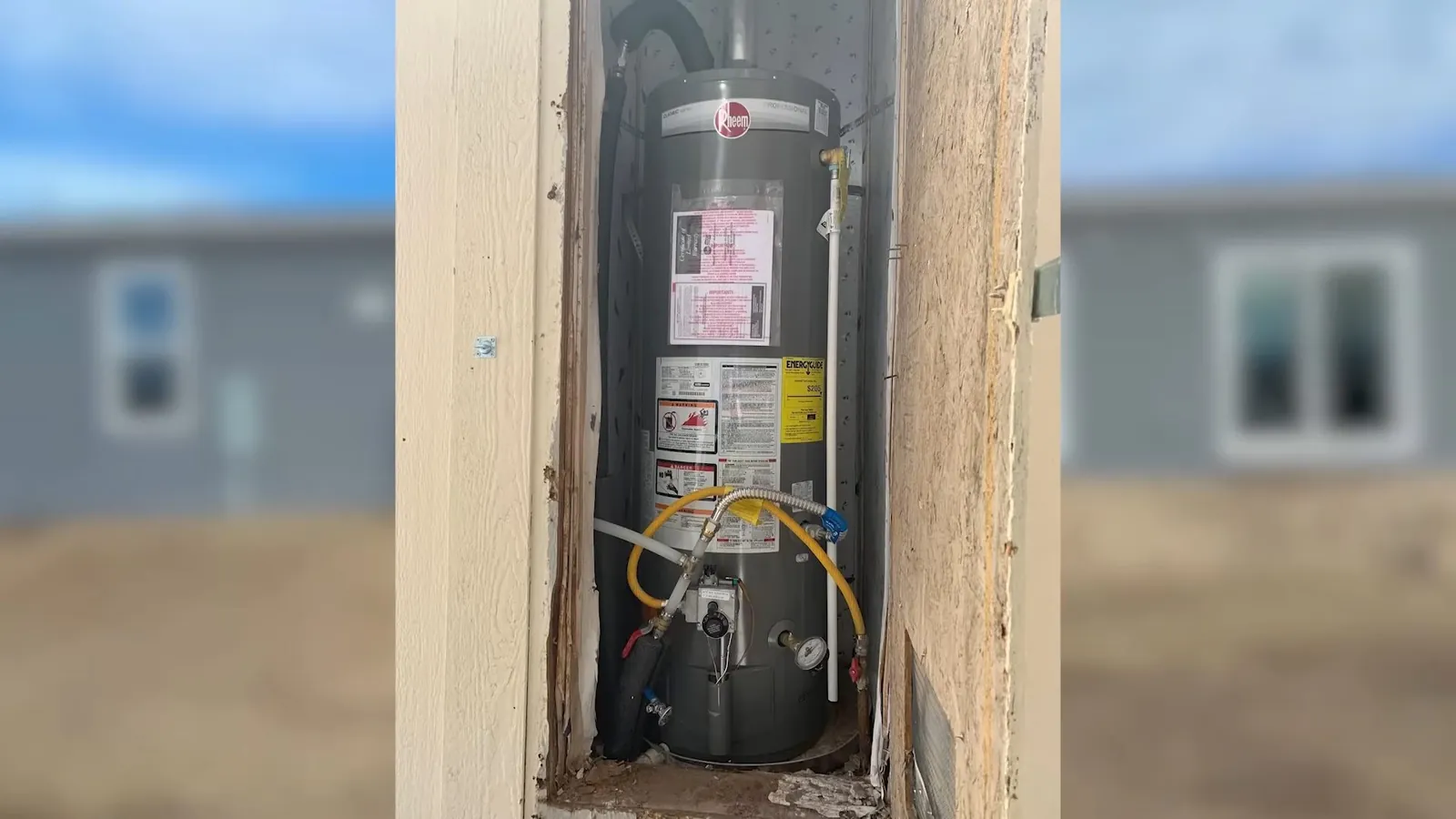
Tank, hybrid or tankless
Three honest options with different trade-offs. The right answer depends on the house more than on the brochure.
| Standard tank | Hybrid heat pump | Tankless | |
|---|---|---|---|
| Typical service life | 8 to 12 years | 10 to 15 years | 18 to 25 years with descaling |
| Up-front cost | Lowest | Highest of the three | Between the two |
| Running cost | Highest | Lowest | Lower than tank |
| Space needed | Tank footprint | Tank plus air clearance | Wall unit, least space |
| Suits a Rowlett garage | Yes | Yes, garages suit heat pumps well | Yes |
| Hot water during an outage | Yes, what is in the tank | Yes, what is in the tank | No, needs power |
Hybrid units pull heat from the surrounding air, which makes an unconditioned garage a genuinely good location for one in this climate rather than a compromise.
Sizing a tank heater by first-hour delivery, not label size
Tank sizing is about first-hour delivery rather than the number on the label. A 40 gallon unit with a fast recovery can out-deliver a 50 gallon unit with a slow one.
The practical questions are how many bathrooms get used at once, whether anyone baths rather than showers, and whether the laundry runs during the same window.
Oversizing costs money twice, once to buy and then continuously to keep water hot that nobody uses. On a typical Rowlett family home, 40 to 50 gallons covers most situations.
Tell us the fuel and the number of bathrooms and we can talk sizing.
How fuel type changes a water heater replacement
Gas units
Venting is the part that decides the work. An atmospheric vent into a shared flue, a power vent through a wall, and a direct vent all have different requirements, and a replacement that changes category changes the job.
Gas line sizing matters as well. A line that fed the old unit adequately may not suit a higher input replacement.
Electric units
Simpler to install and usually lower up front, with higher running costs. The main constraint is the circuit: a heater drawing more than the old one needs the breaker and cable checked rather than assumed.
Hybrid heat pump units
These need air volume to work, and a condensate drain. In a garage both are usually available, which is why they suit this market.
They are taller than a comparable tank, so overhead clearance is worth measuring before ordering rather than on the day.
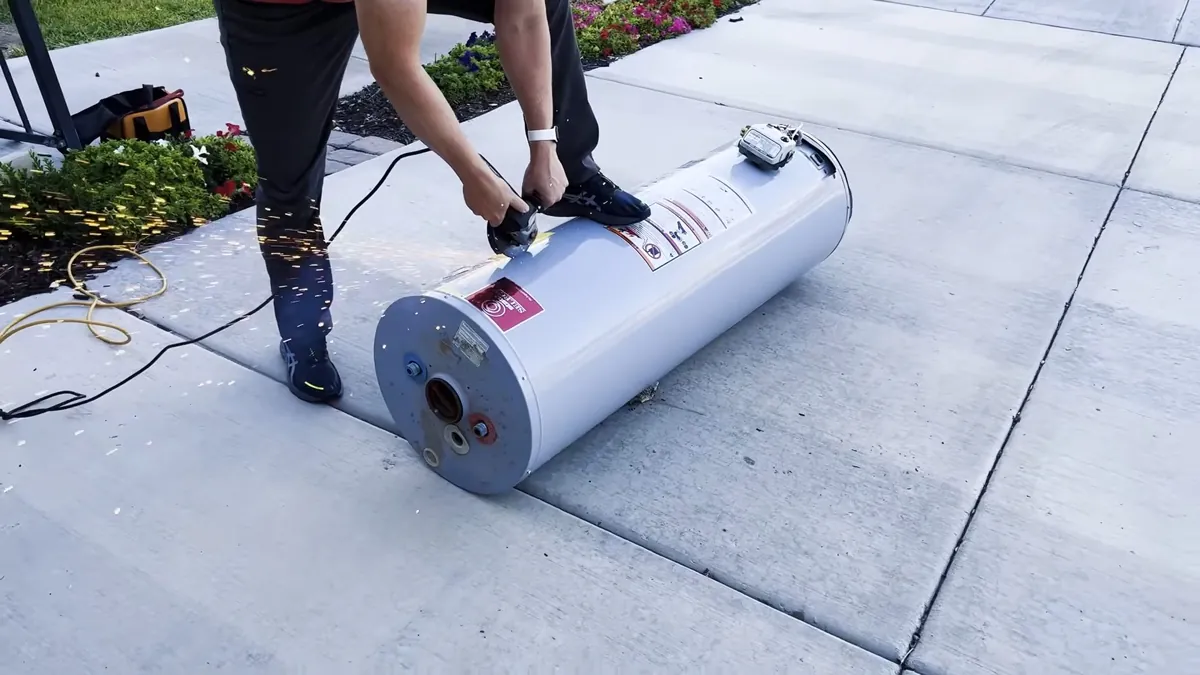
The code work a replacement often brings with it
An expansion tank is the most common addition. Where the supply has a check valve or pressure reducer, the system is closed, and heated water has nowhere to expand to. The relief valve then does the job instead, which is not what it is for.
A drain pan with a routed discharge is the second, particularly where the unit sits where a leak would reach finished space.
Relief valve discharge routing, gas venting and seismic requirements vary by jurisdiction. Texas has no seismic strapping requirement, which is a California rule that gets copied onto Texas pages fairly often and is worth ignoring when you see it.
Whether the swap is a permitted event is covered in the questions further down this page, along with what the inspection actually looks at.
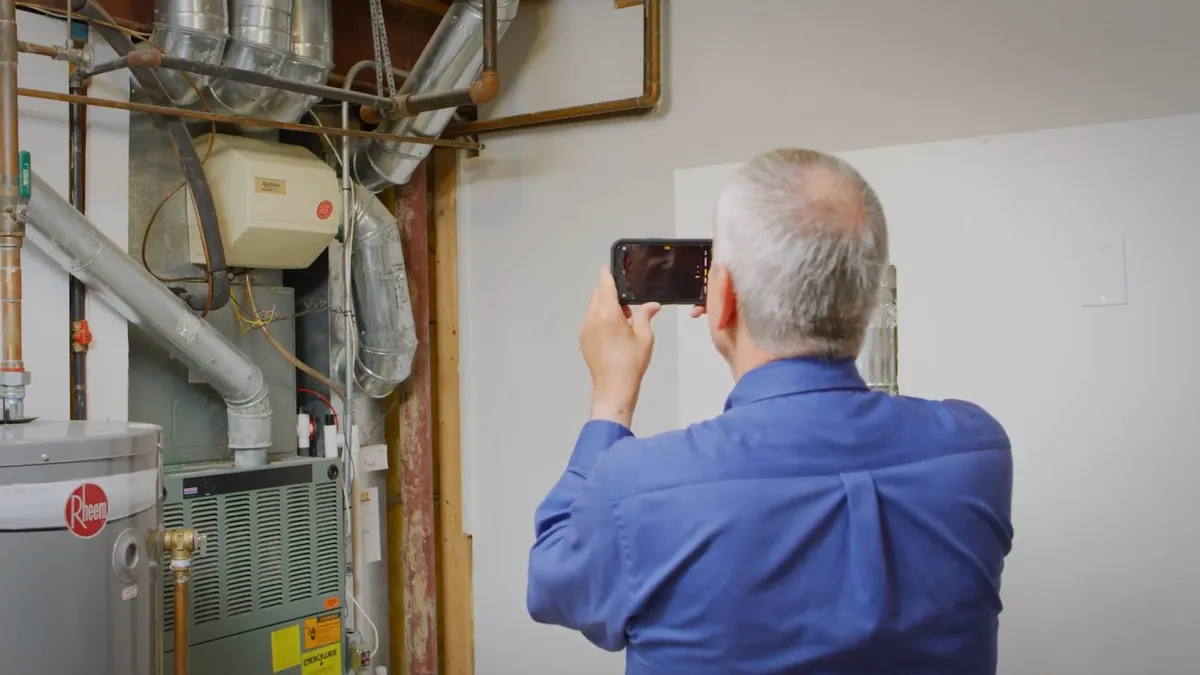
What replacement day looks like
- Isolate: water off at the cold inlet, gas off or breaker off, and the tank drained.
- Disconnect and remove the old unit. Removal and disposal is part of the job rather than a surprise line item.
- Set the new unit, including any pan, and confirm clearances before connecting anything.
- Make the water connections, fit the expansion tank if the system calls for one, and route the relief discharge.
- Connect the fuel, then test. Gas connections get a leak check; electric gets the circuit verified before energising.
- Fill, purge air at a hot tap, bring to temperature and check every connection again under pressure.
Allow most of a working day for a straightforward replacement, longer where venting or the gas line has to change.
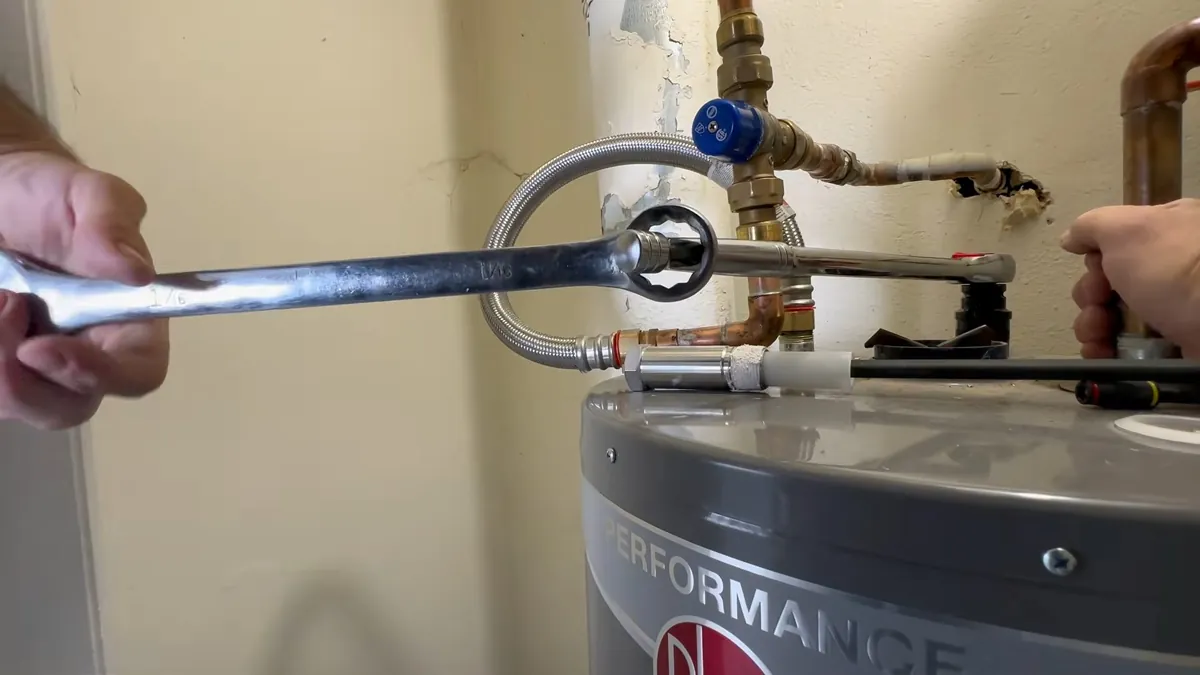
What it costs and what moves it
| Work | Range | What moves it |
|---|---|---|
| Water heater replacement, tank | $1,200 to $2,800 | Tank size (40 against 50 gallon), gas or electric venting, and whether an expansion tank is required |
| Tankless installation | $2,500 to $4,800 | Gas line sizing, electrical panel capacity, and exterior venting |
Hybrid units sit above the tank band and are quoted per job. The full published table lives on the cost page, and the number you are given is in writing before anything starts.
Hard water, and what it means for a new unit
The district supply serving Rowlett measured 105 to 202 mg/L of total hardness over the course of 2024.
That matters at installation, not just later. Fitting the drain valve so the tank can actually be flushed, and leaving clearance to work at it, is the difference between annual maintenance happening and not happening.
It is also the strongest argument for the hybrid option on running cost, since a unit that heats more efficiently spends less time driving scale out of solution onto the element.
Water heaters for new builds and accessory dwelling units
Rowlett is still adding housing, and the Sapphire Bay development alone is planned to bring more than 1,500 residential units. A water heater on a new build or an accessory dwelling is set as part of rough-in and trim work, so it follows a programme rather than a callout.
Scheduled work has inspection points built into it. Rough-in has to be signed off before anything covers it, so the timing follows the inspector's calendar rather than ours. Ask for the heater's location, venting and any drain pan to be settled before the walls close.
Choosing and fitting a new water heater
How long is the house without hot water?
On a like-for-like tank swap where nothing has to be brought up to current code, most of a morning. The tank has to drain before it can be moved, which is the slow part and cannot be hurried.
If the venting has to change, or a pan and a drain line go in where there was none, it becomes a full day. We will tell you which of those two it is after looking, rather than after starting.
Is a permit required to replace a water heater here?
A replacement commonly needs one, handled through the city's Building Safety team. We have not been able to read Rowlett's current threshold directly, so we are not printing it here as fact.
Ring the city and ask. It is worth doing: an unpermitted water heater is a problem at the point of sale.
Does it need a licensed plumber?
Yes. Gas connections, venting and high-current electrical work alongside pressurised water is squarely licensed territory, administered by the Texas State Board of Plumbing Examiners.
The licence details for the plumber sent to you are available on request before anything is disconnected.
Is a hybrid heat pump unit worth it in this climate?
In a Rowlett garage, often yes. They need air volume and a condensate drain, and a garage usually has both. Running costs are meaningfully lower than a standard electric tank.
The up-front cost is higher and they are taller, so overhead clearance needs measuring before ordering.
Can I just swap like for like and avoid the extra work?
Sometimes, but not reliably. A replacement is the moment the installation gets looked at against current requirements, and an expansion tank or a pan is a common addition.
We will tell you what your specific installation needs when we quote it, not on the day.
What drives the cost of replacing a water heater here?
Mostly what has to change around the tank, not the tank. A like-for-like swap with the vent and gas connection already right sits at the low end of the plumbing cost guide range.
Venting that has to be rerouted, a missing expansion tank, or a move from tank to on-demand pushes it up. The written figure after a look says which of those apply to your house.
Ask what code work your installation needs before the day, not on it.
Garage location? That is where a hybrid heat pump unit makes sense here.
Related work on this site
If the unit has a fault rather than having reached the end, water heater repair covers what is worth fixing and what is not. Going tankless instead is tankless heaters, which has its own sizing and venting questions. A damp patch near the heater that turns out not to be the heater is slab leak work.
Replacing a water heater?
Tell us the age, the fuel and roughly how many people are in the house. That is enough to talk sizing and give you a realistic range.