
Water heating, Rowlett TX
Cold Showers or a Wet Floor? Water Heater Repair in Rowlett, TX, Fix or Replace
A water heater that is leaking from the tank body is on a clock. One that has stopped heating usually is not, and the two get the same panicked phone call.
This page covers repairing an existing tank unit. New installations and tankless work have their own pages, because the decisions are genuinely different.
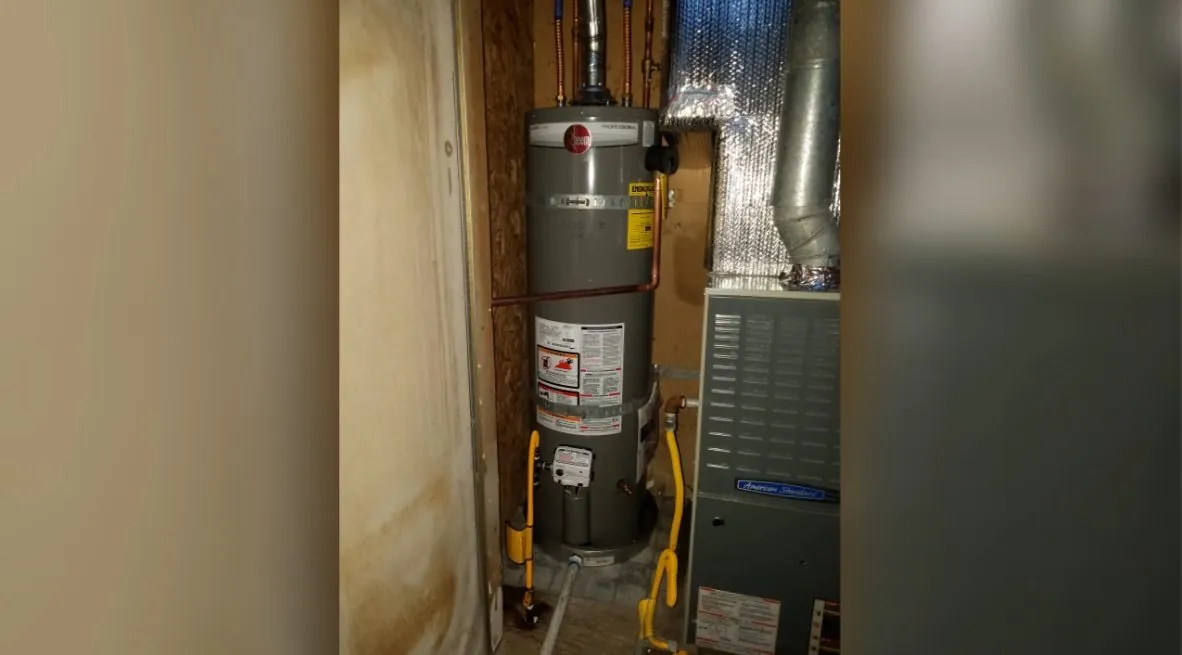
Leaking right now: shut these off, in this order
- Close the cold water inlet valve on top of the tank. Of everything on this list that one matters most, and it takes the heater out of circuit while leaving the house supplied.
- On a gas unit, turn the gas control to off. On an electric unit, switch off its breaker at the consumer unit.
- Do not drain the tank yet unless water is reaching something it should not. Draining a tank that is about to be assessed makes diagnosis harder.
- Move anything stored around the base, and photograph it before you mop.
- Then call, and say whether the water is at the top, the fittings, the relief discharge or the base.
Where the water is coming from decides everything
Dry the unit, put paper towel underneath, and run the hot tap for a few minutes. Where it reappears first is the answer.
| Where the water appears | What it usually is | Repairable |
|---|---|---|
| Top of the tank, around the inlet or outlet | A fitting or union that has loosened | Yes, usually simple |
| From the T and P relief discharge pipe | Pressure or temperature too high, or a failed valve | Yes, but find out why it opened |
| At the drain valve near the base | Valve seal failed, often after a flush | Yes |
| Around the base, from underneath the shell | The tank itself has corroded through | No, replacement |
| Only during a heating cycle | Expansion pressure, often a failed expansion tank | Yes, and worth fixing properly |
| Nowhere obvious, but the floor is wet | Could be condensation, could be a slab leak nearby | Needs detection, not assumption |
That last row matters in this city. Most Rowlett heaters sit in the garage at the slab edge, which is exactly where an under-slab leak shows itself first. We check that before condemning a tank.
Leaking now? Close the cold inlet on top of the tank, then ring.
Gas units and electric units fail differently
Same symptom, different cause, different repair.
Gas tank units
No hot water on a gas unit usually means the pilot or ignition, the thermocouple, or the gas control valve. A pilot that lights and then drops out is the classic thermocouple pattern.
Venting matters here too. A unit that has started producing soot or that smells when running needs looking at promptly rather than at your convenience.
Electric tank units
Electric units heat with two elements and a thermostat for each. Lukewarm water that runs out fast is the classic sign of one failed element, because the other is doing all the work.
Elements and thermostats are both replaceable parts, which makes a lot of electric water heater faults genuinely worth repairing rather than replacing.
No hot water, or not enough of it
Before you call, these narrow it down usefully.
- No hot water at all, suddenly. Check the breaker on an electric unit, or whether the pilot is lit on a gas one.
- Hot water that runs out much faster than it used to. Points at a failed element or heavy sediment taking up tank volume.
- Water hotter or cooler than the thermostat setting. Usually the thermostat itself.
- Rumbling or popping noises during heating. Sediment on the tank floor boiling underneath it.
- Rusty or discoloured hot water only. Often the anode rod is spent and the tank is starting to go.
- Hot water fine at one tap and poor at another. That is a fixture or pipe problem, not the heater.
What Rowlett's water does to a tank
Rowlett's supply comes from the North Texas Municipal Water District, drawn mainly from Lavon Lake and treated at the district's Wylie plants.
Sampling through 2024 put the hardness of that supply between 105 and 202 mg/L, which converts to somewhere around 6 to 12 grains and sits in the band most manufacturers describe as hard to very hard.
Hard water precipitates scale onto the hottest surface in the system, which is the bottom of your tank or the surface of an electric element. Scale insulates, so the burner or element runs longer to reach the same temperature, which shortens the life of both the component and the tank.
Flushing the tank annually is the lowest-cost thing you can do about it, and almost nobody does it.
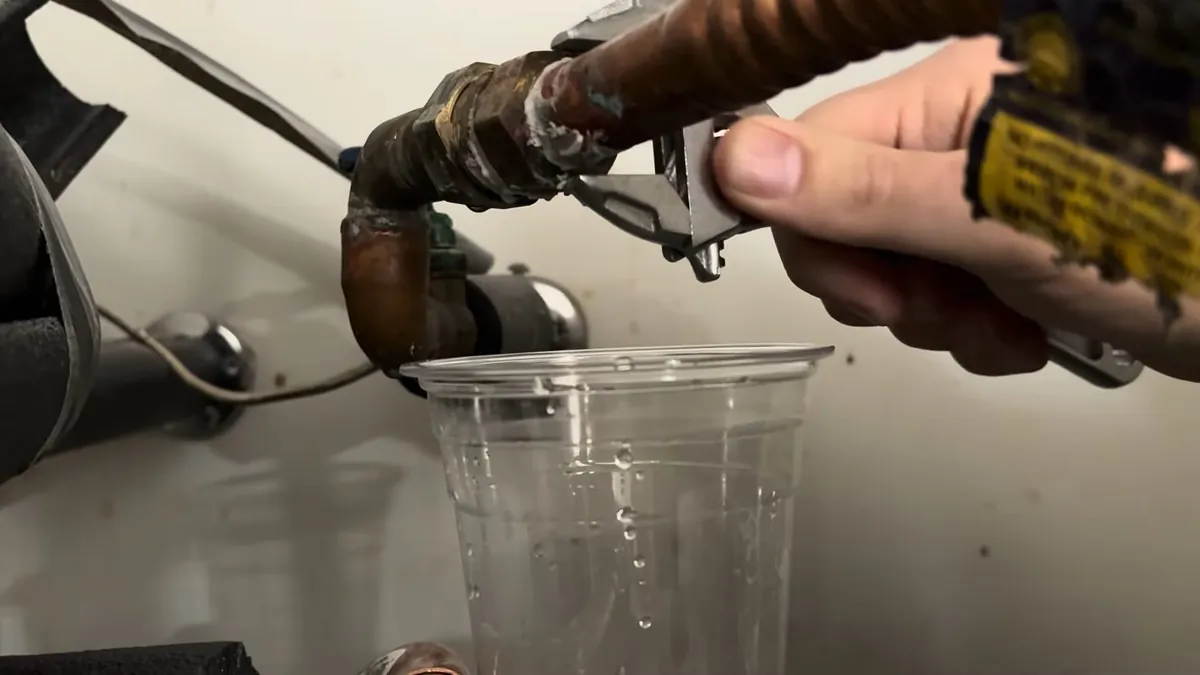
Combined repairs: the heater and the fixtures it feeds
Scale does not stop at the tank. The same water deposits in tap aerators, shower heads and mixer cartridges, and a complaint about poor hot water is sometimes a restricted fixture rather than a heater fault.
Where both are true we will say so rather than fixing one and leaving you to ring again about the other.
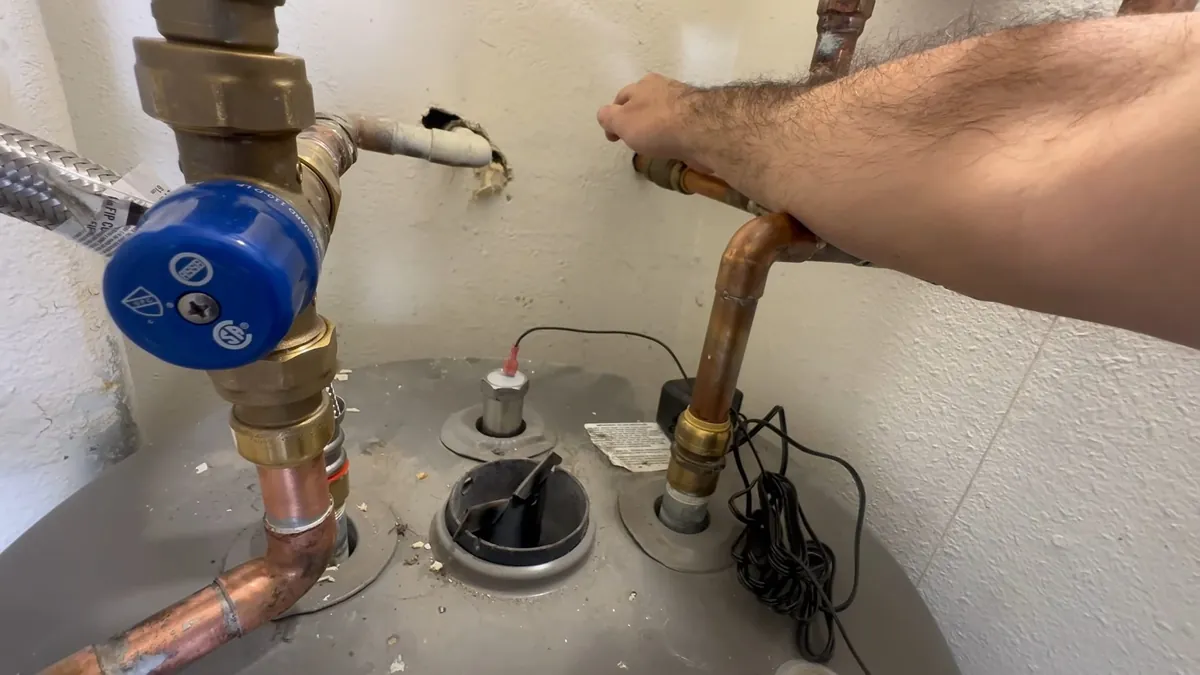
When repair stops making sense
A tank leaking from the shell is finished, whatever its age. Corrosion does not reverse and a patched tank fails again under pressure.
Beyond that, the honest line is roughly this: a unit under eight years old with a failed component is usually worth repairing. One past twelve with a major fault usually is not, because you are spending real money on a tank already near the end of its service life.
If replacement is the answer, water heater replacement goes through what gets fitted and what has to change around it. We would rather tell you that than sell you a repair twice.
Hot water questions from Rowlett homes
How long should a water heater last here?
Tank units generally run 8 to 12 years, and tankless units 18 to 25 with annual descaling. Rowlett's hard water tends to push tanks toward the lower end of that span rather than the upper.
Rumbling noises and rust in the hot water are the two signs that usually mean replacement rather than repair.
When does replacing make more sense than repairing?
Two signals matter more than age on its own. Rust in the hot water means the glass lining has gone, and that is terminal. A tank that has already had a thermostat and an element inside a year is telling you about the next twelve months.
A single failed part on a unit still in its first decade, with clean water out of the tap, is usually worth repairing. The installation page sets out what the other route involves.
Will a repair pull me into permit territory?
Repairs on an existing heater, a thermostat, an element, a gas valve, a relief valve, generally do not. Taking the unit out and putting a different one in is where that changes, and the new water heater installation page covers what a replacement involves.
It is worth knowing the line, because a repair quoted on a unit that is actually at the end of its life turns into a replacement halfway through the day.
Does a licensed plumber have to do this?
For anything beyond relighting a pilot, yes. Water heater work involves gas or high-current electrical connections alongside pressurised water.
Licensing in this state runs through the Texas State Board of Plumbing Examiners. Checking the licence and the insurance behind it sits with you as the homeowner.
Should I flush my tank, and how often?
Yes, annually, and it genuinely matters on water this hard. Flushing removes the sediment that insulates the bottom of the tank and makes the burner or element work harder.
If a tank has never been flushed and is already eight or more years old, mention that when you call. Flushing a heavily scaled old tank occasionally finds a weakness that was being held together by the sediment.
What decides what a water heater repair costs?
The part and the access, in that order. A thermostat, element or valve is a small job on a tank that is otherwise sound, and the range on the cost breakdown page covers the bigger jobs beside it.
Once the leak is from the tank itself, no repair is on offer and the conversation moves to replacement. We would rather say that on the phone than after a visit.
Tell us gas or electric when you call. It changes what we bring.
Never flushed it? Say so. On water this hard it matters.
Related work on this site
If the tank has reached the end rather than developed a fault, heater installation sets out the tank, gas and hybrid options and what each one needs behind the wall. Going tankless is tankless water heaters. Damp near the garage slab with nothing to do with the unit itself is slab leak detection and repair.
Heater leaking or cold?
Tell us where the water is coming from and whether the unit is gas or electric. Those two answers decide most of what happens next.